Lathe work
Balance staffs
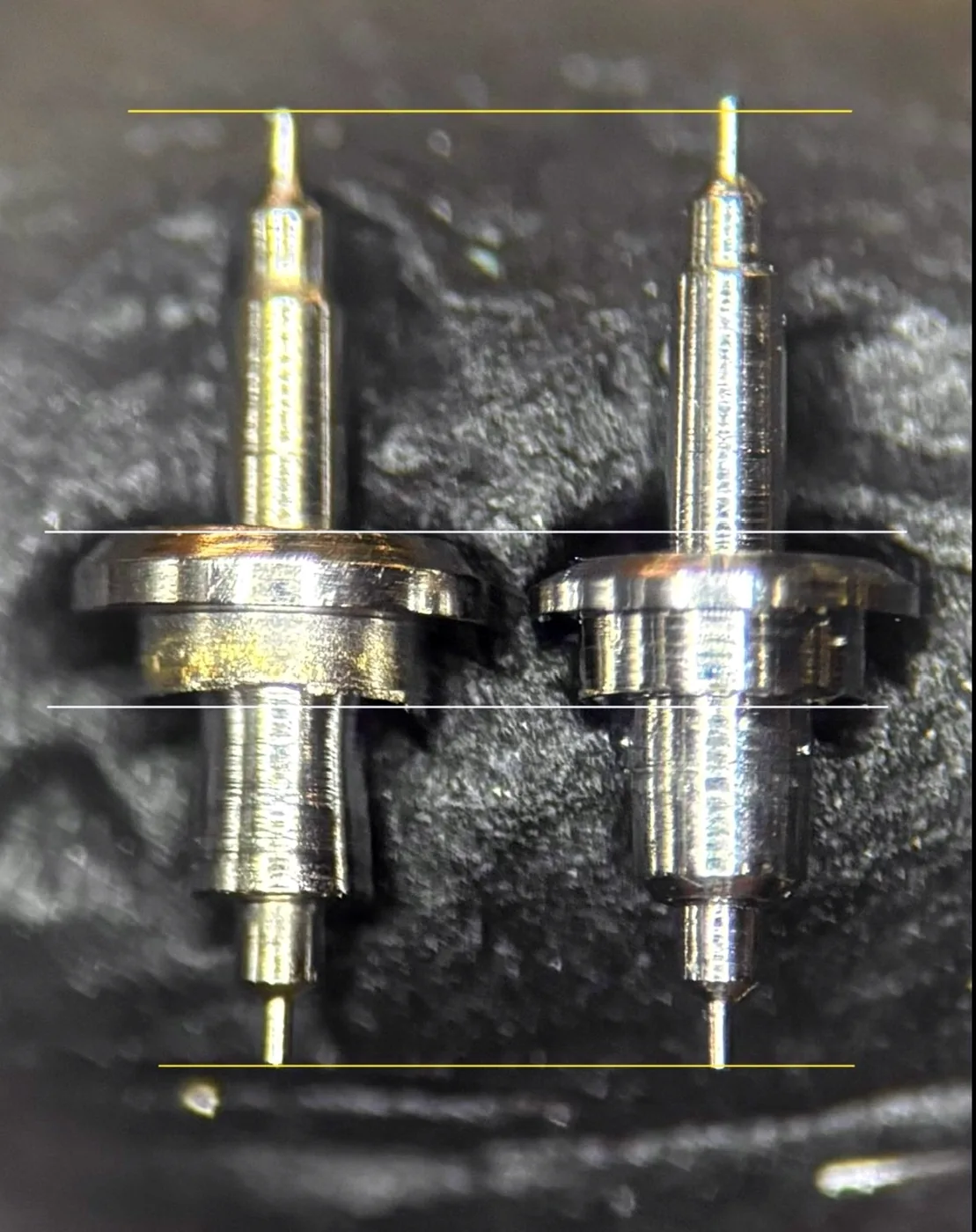
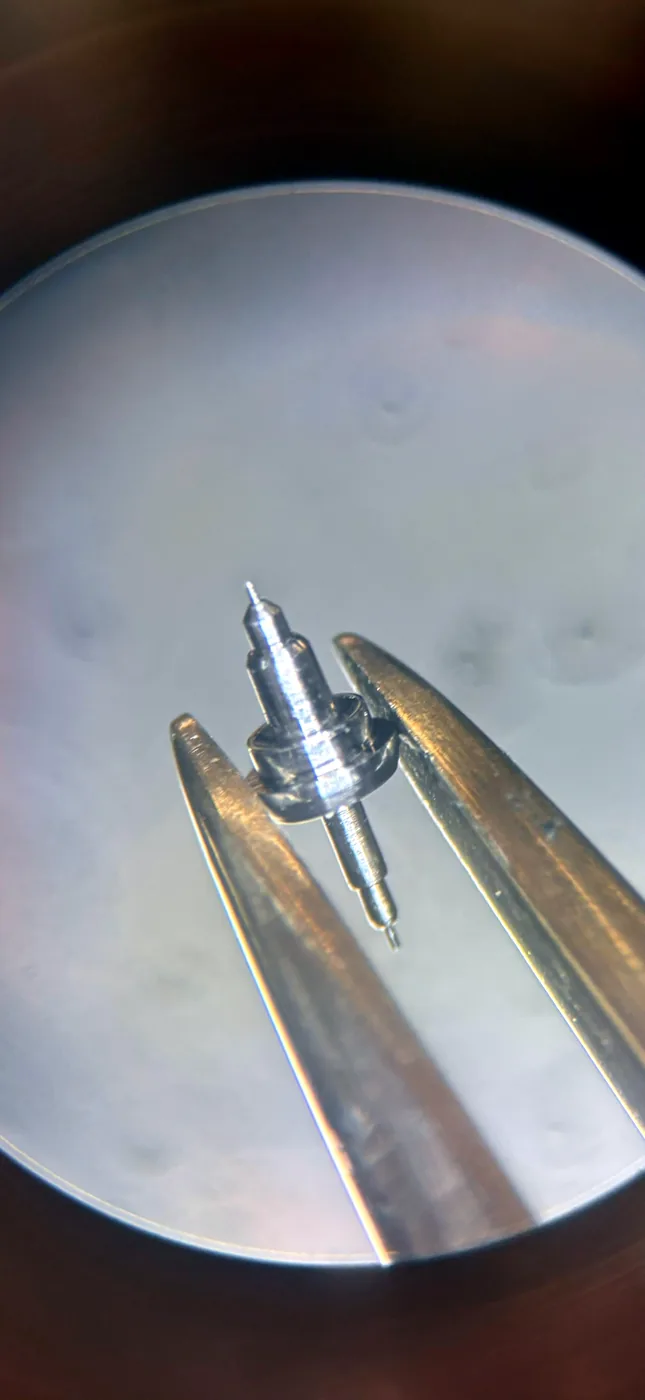
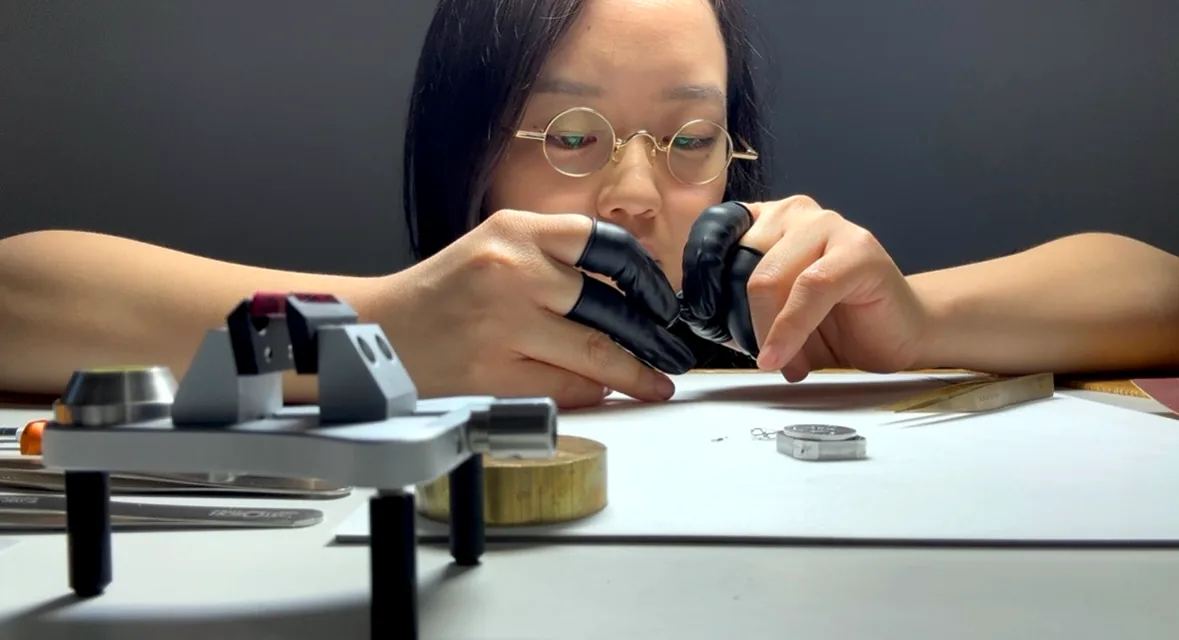
The balance staff is the axle the balance wheel turns on. Its pivots are thinner than a hair. I turn them on the lathe, then check each one against a reference under the microscope.
Korean watchmaker in training · Espoo, Finland
balance staffs, make
my own tools, and look
closely at
every small thing.I'm Areum Im. I study on the Independent Watchmaker Course at Kelloseppäkoulu, the Finnish School of Watchmaking. I finish in summer 2027, and I'm looking for a bench in Europe.
/
Kelloseppäkoulu
/
Oy Osk. Lindroos /
Nomadic Watches /
Manufacture Grand-Ducale
/
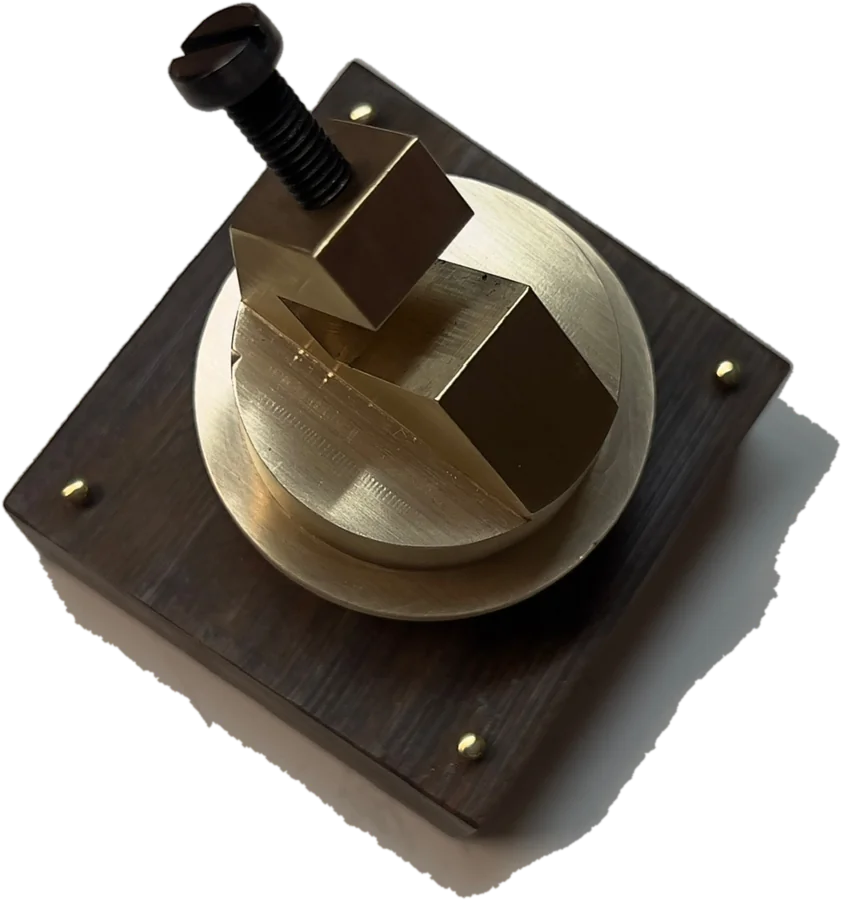
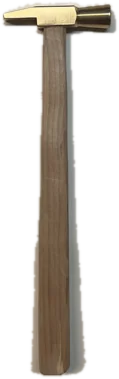
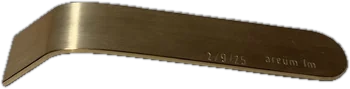
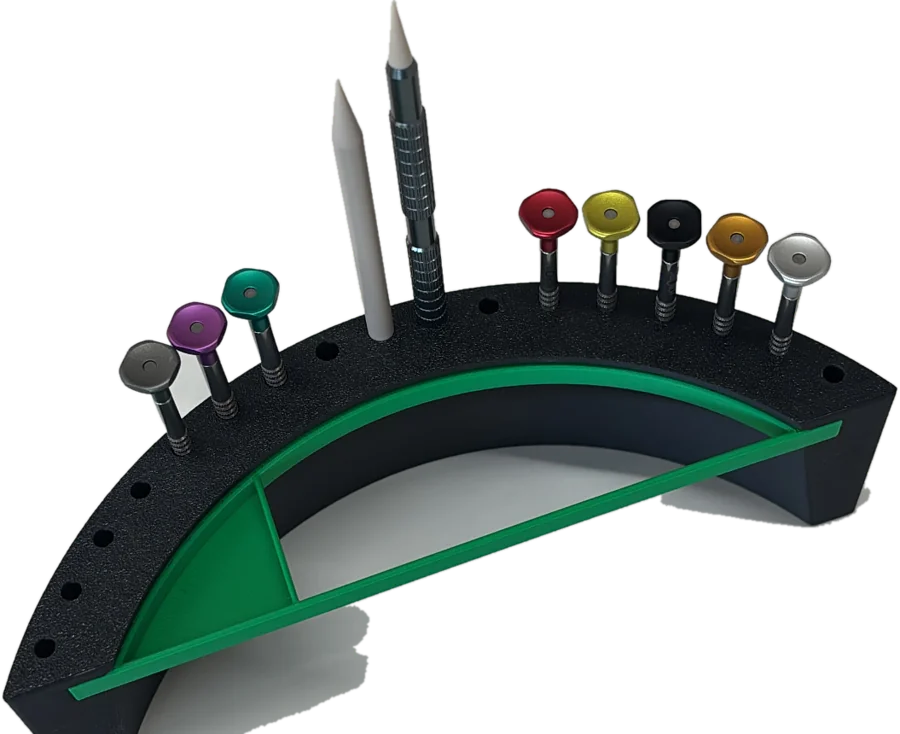
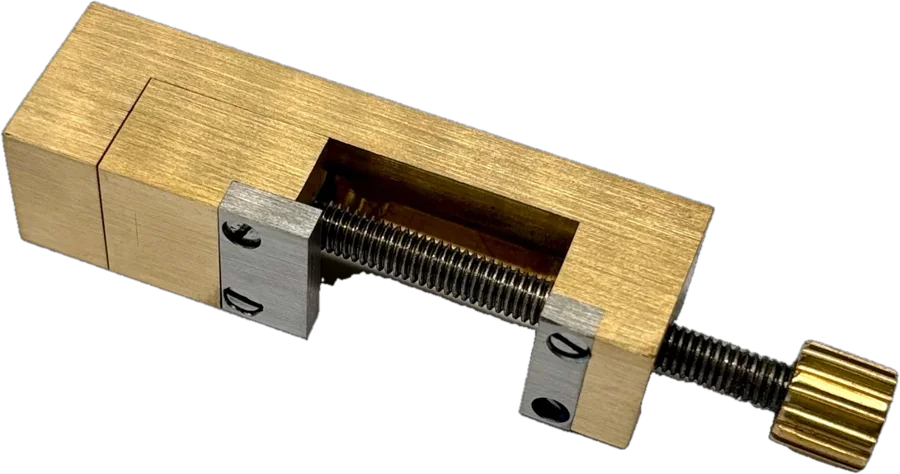
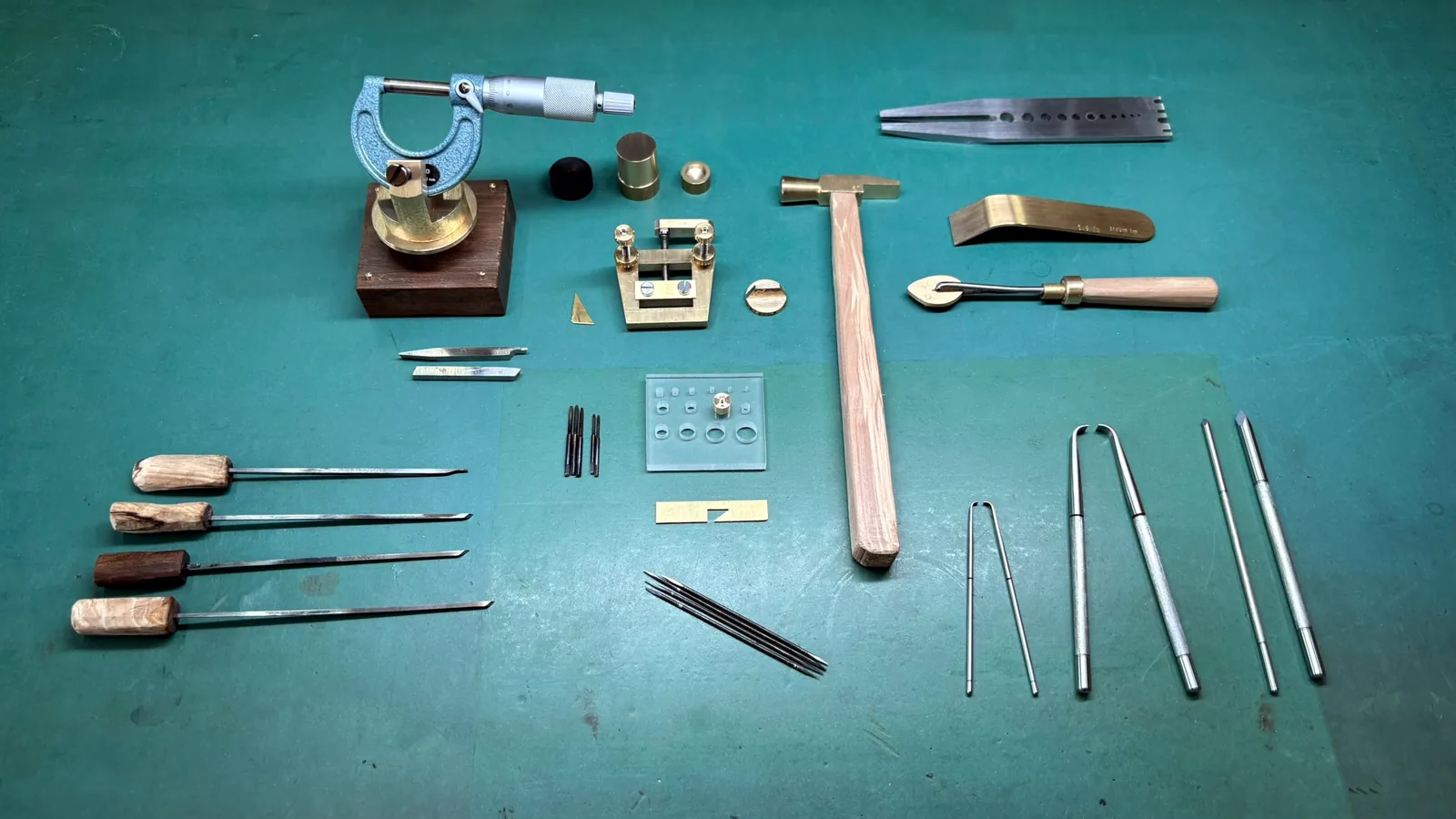
My training in Finland began with making the tools I now work with: cut with a saw, filed, milled and turned. Some of them carry my name and the date. Others I designed in Fusion and 3D printed.


Brass, steel, wood, and one printed in plastic.Kelloseppäkoulu · 2025–26


Small parts, made and repaired. Move your cursor over a photo to look closer, the way I would under the loupe.


Lathe work
The balance staff is the axle the balance wheel turns on. Its pivots are thinner than a hair. I turn them on the lathe, then check each one against a reference under the microscope.

Repair
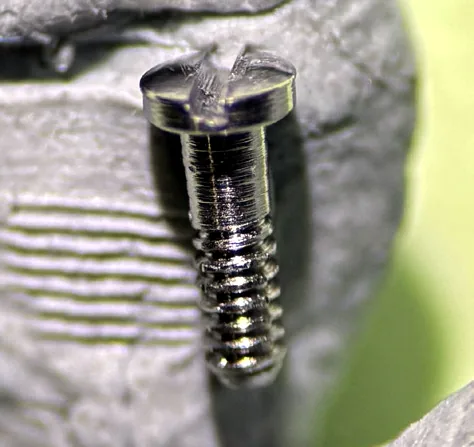
The click spring had been fitted with the wrong screw, so it could not work. I drew the part and measured it, turned it on the lathe, cut the thread with an M0.65 tap, formed the slot and polished the head.

Restoration
It came to me rusted and discoloured. I took it apart, cleaned and refinished every piece, and put it back together. Now it is on my bench again.

Toolmaking
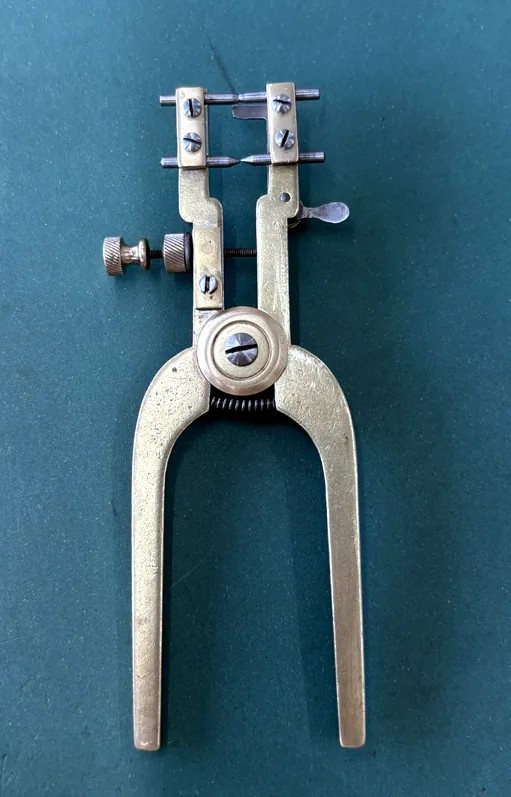
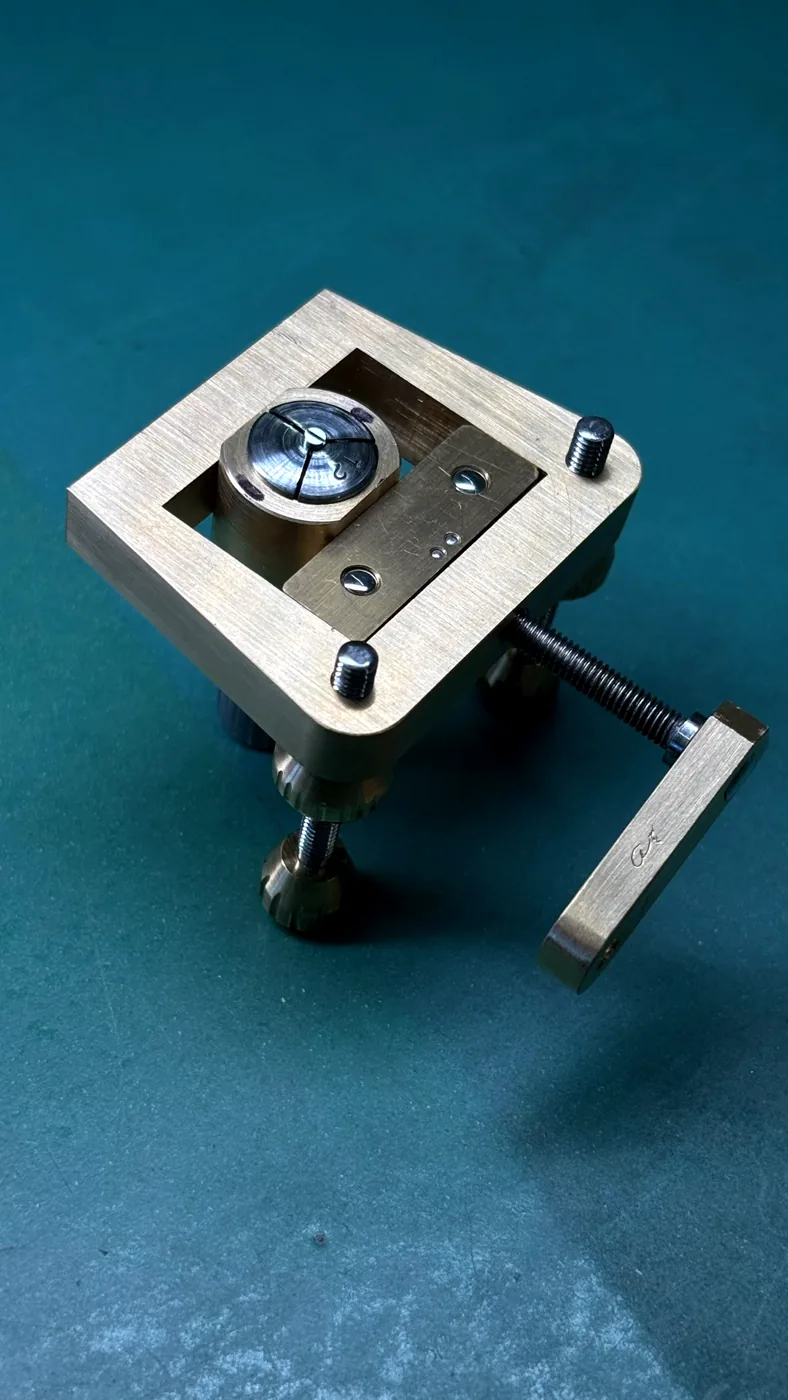
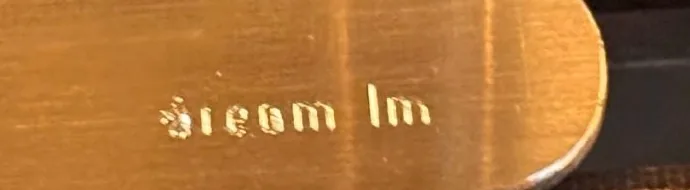
Sawn, milled, tapped and turned from brass stock. Making a tool teaches you what the tool is for, and what the part it touches needs.
Hover any photo to look closer
People told me I had started too late. I kept going anyway. This is the short version.
Where it began
It started with a vintage watch my grandmother gave me. I wanted to know what was moving inside it. For ten years watches stayed a hobby while I worked in other things.
2011 – 2021
I studied ceramics and graphic design in Seoul, then worked as an art director at an advertising agency. Ceramics taught me to trust my fingertips and to listen to the material. Design taught me proportion, and how small parts work together.
Once I cast a plate from a stone I liked. Nobody understood why I made it, not even my mother. It is still my favourite plate. I still make things that way.
2021 – 2024
I started with a watch assembly seminar at Timelab, designed worksheets and materials for a restoration workshop, and learned the lathe and milling machine at 3Hands Studio. Then I joined Swatch Group Korea as a diagnostics technician, checking 20 to 25 watches a day.
2024 – 2025
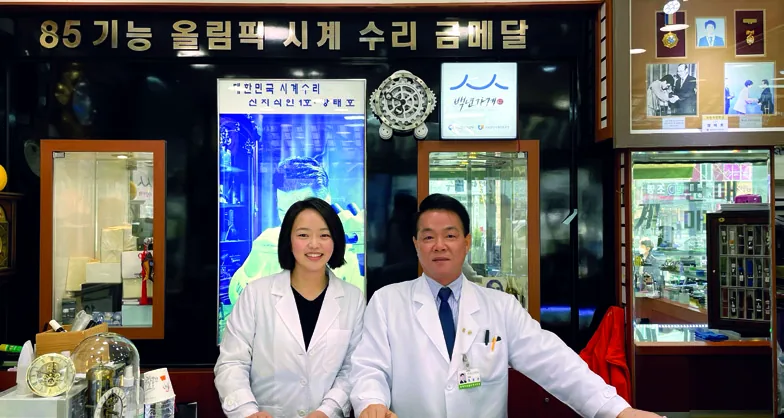
Korea had no school where I could learn watchmaking. So I left Seoul for Daegu and asked a master to teach me. For a year I worked full time beside Jang Taeho, gold medallist in lathe work at Korea's 1985 National Skills Competition: servicing, lathe work, balance staffs, pivots.
In the same years I repaired watches as a volunteer at nursing homes, orphanages and charity events.

2025 – now
A school in Switzerland turned me down because I already had professional experience. I kept looking. When Kelloseppäkoulu opened its Independent Watchmaker Course to international students for the first time, I was selected.
Since then: the Grace Fryer Scholarship from the Horological Society of New York, and three internships in 2026. Oy Osk. Lindroos in Helsinki, Nomadic Watches in Belfast, and Manufacture Grand-Ducale in Luxembourg, where I assembled and balanced a tourbillon cage.

2027
I want it to be my own. Korean in feeling, made in Finland, with the small parts nobody looks at done properly. I have been redrawing a screw that nobody else seems to notice.

From summer 2027

I would like to join an independent or boutique workshop where watches are made, not only serviced. I want to keep learning beside people who care how the work is done.
I am happy to relocate within Europe. If you have a bench, a question, or someone I should meet, please write to me.